Health that keeps pace with your plans.

Trace, the only health AIdesigned by doctors.; that thinks things through with you.; that remembers your whole health journey.; built on the latest guidelines.; that makes your health data actionable.

Opening soon · Free initial assessment

You already have it all. Hand me a piece of data: I'll connect the dots.

Works with

  • Apple Health
  • Health Connect
  • Garmin
  • Fitbit
  • Oura
  • Withings
  • Medical report
  • Lab result
  • Imaging
  • Prescription

At every moment of your health

The thread carries on between appointments.

Trace starts from your data, and when a decision calls for an outside opinion, the essentials are already gathered in a structured brief. With MédecinDirect, our partner, a doctor is on hand to take over.

1 Taking stock

Understand your health and arrive prepared.

Make sense of your health, with sources to back it up. Your conversations turn into a brief to show your doctor: you walk in knowing where you stand and what to talk about.

2 Handling the unexpected

A question comes up?

Trace, your AI health ally, is there 7 days a week. You can ask her anything: from the symptom that worries you to the question you don't dare ask. Trace also finally makes sense of the data from your connected devices.

3 Writing what's next

Better habits, sized to your life.

Trace starts from your reality, not from an ideal. She helps you find where the impact lies, and the first level of benefits comes sooner than you'd think: small changes, remarkable results.

No beating about the bush

Ask anything.

  • You: I'm back from holiday with patches on my skin, that's not good, is it?

    Trace: Got it, thanks for the photo! I need a little more to advise you: are they raised?

  • You: 10,000 steps, is that really the goal?

    Trace: No. It's a useful threshold to keep in mind (the WHO put out some enlightening guidance on it), but the benefits start much earlier, from 2,500 steps a day, and most of them are there by around 7,000 steps.

  • You: Is a glass of wine a day good for the heart?

    Trace: No, that's a myth. The guideline is 2 glasses a day at most, and not every day.

  • You: My HRV dropped this week, should I be worried?

    Trace: It went from 48 to 36 ms. That happens after a bad night, alcohol, stress, or at the start of an infection like a common cold. Is the little one waking you up a lot?

  • You: The tip of my penis is red and itchy, is it an STI?

    Trace: Not necessarily. It's often balanitis, a common and harmless inflammation (a yeast infection, an irritating soap). Is it a symptom you've had before?

What sets us apart.

  • Designed by doctors

    Trace draws on a demanding medical knowledge base: guidelines from health authorities (France's HAS, the WHO) and medical societies, and indexed medical literature.

  • Trace cites her sources

    Behind every piece of health information, there is always a dated source, one tap away.

  • 100% independent

    Trace Care belongs to no platform, no insurer, no laboratory. Nobody sponsors Trace's advice, and your data is not for sale.

  • Your data stays yours

    It will never be sold, or used to train another company's AI. Your data is hosted in France by an HDS-certified host (Hébergeur de Données de Santé, the French certification for hosting health data). You can export and delete your data at any time.

The team behind Trace Care

Three backgrounds, one shared vision of health.

Trace Care grew out of three years in the field, listening to what people want for their health. It brings together a doctor, an operations lead and an engineer, who pooled their skills to build Trace: a conversational AI that talks only about health. She makes yours readable and concrete, and gives you back the power to act.

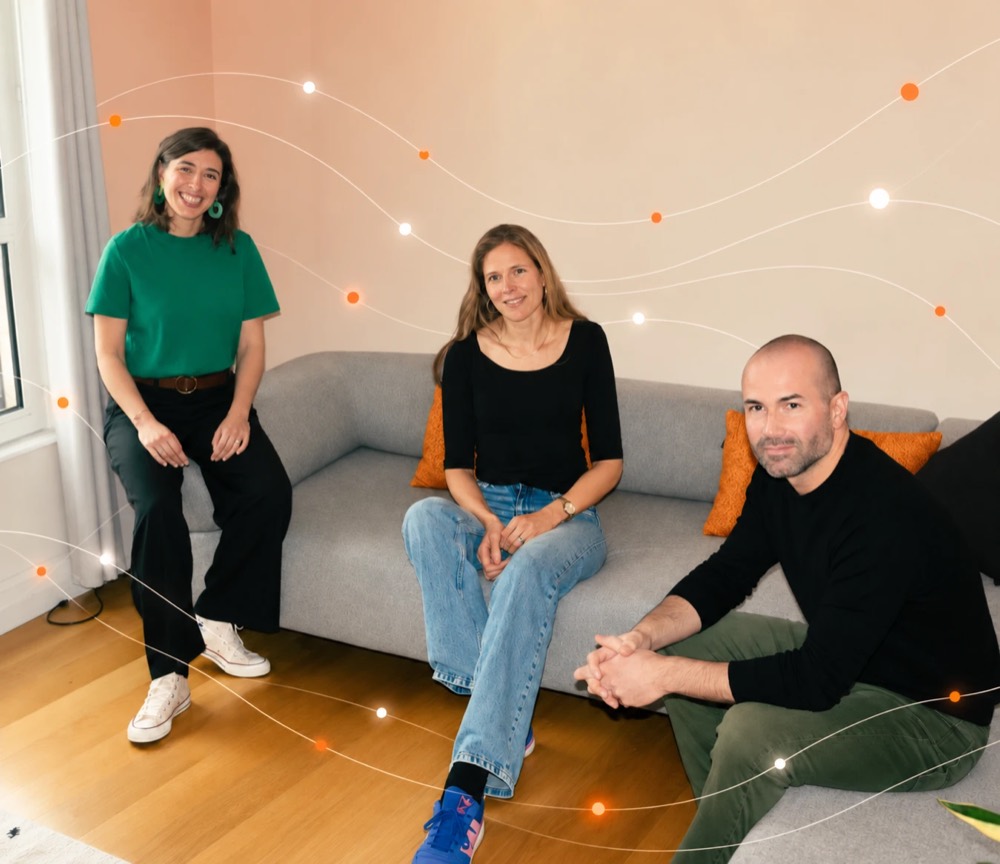
Lucille Dudreuilh, Anne-Laure Rousseau and Romain Franceschini, together around a grey sofa
From left to right: Lucille Dudreuilh, Anne-Laure Rousseau and Romain Franceschini
  • Anne-Laure Rousseau

    Founder · doctor

    A doctor for more than ten years, in cardiovascular surgery at the Hôpital Européen Georges-Pompidou and at SOS Aorte, where you see what “arriving too late” can mean. After leading AI research on a project run with AP-HP (the Paris public hospitals) and Inria, and serving as medical director at Nabla, she founded UnPatient, a pilot health-coaching project. Today she is launching Trace Care: the version designed for everyone.

  • Lucille Dudreuilh

    COO

    More than ten years of experience across sectors (finance, wine, healthcare), time at Groupe Artémis and the founding of a medical imaging centre: she turns vision into operational execution.

  • Romain Franceschini

    CTO

    A PhD in multi-agent systems, well before the LLM era, he went on to lead technical teams as CTO and Head of Software at several SaaS startups.

Backed by

Frequently asked questions

(We wondered the same.)

“When can I start using Trace Care?”

The app is being finalised with our medical team. Leave us your email: we'll write to you on launch day, and not before.

“Is it ChatGPT with a subscription?”

No. Trace has read a lot of the Vidal (France's reference guide to medicines) and very little Reddit. She is designed by doctors, talks only about health, knows your data and answers by citing identified, dated sources: guidelines from medical societies and indexed medical literature.

“Does the app speak English?”

Yes. Trace Care is available in English as well as French, so you can understand your health in the language you're most at ease in, while it stays rooted in the French healthcare system you use.

“My watch already judges me when I sleep badly.”

Trace doesn't measure anything (and doesn't judge you either). She makes sense of what your watch or ring measures: she puts it in context against the published references for your age and profile, and brings it together with your test results for the next time you see a doctor.

“Won't it just tell me to see a doctor…?”

No. Trace explains what a marker measures, what current guidelines say about it, and what changes with age or profile. When a decision belongs to a health professional, she tells you clearly and prepares a structured brief so the appointment gets straight to the point.

“Does it replace my doctor?”

No, and that's not the idea. Trace doesn't diagnose and doesn't prescribe. She helps you understand and act between appointments, and makes the time you spend with your doctor more useful.

“How do I give this brief to my doctor?”

It's a one-page PDF you download from the app: print it, send it, or show it on your phone. It sums up the situation, the relevant data and the questions to ask.

“Which devices and documents?”

Anything that goes through Apple Health or Health Connect (Apple Watch, Garmin, Fitbit, Oura, Withings and many more), plus your blood tests and medical reports as PDFs. And if a mole or a rash puzzles you, a photo is enough: Trace reminds you of the signs that should put you on alert.

“Where does my data go?”

To a host in France certified HDS (Hébergeur de Données de Santé, the French certification for hosting health data). It will never be sold, or used to train another company's AI. You can export and delete it at any time. Trace Care lives on its subscriptions, not on your data.

“How much does it cost?”

The initial assessment is free, and we give you 7 days to try the full service. After that, €28 a month with no commitment, or €300 a year, which comes to €25 a month. Cancel at any time from your Apple or Google account.

“What if it's urgent?”

Trace Care is not an emergency service. In an emergency, call 15 (the SAMU, France's emergency medical service) or 112: the number is always one tap away in the app's menu.

In a few minutes, you’ll know where you stand.

Trace Care opens soon. Leave us your email: we'll write to you on launch day.